
Meshy AI Review 2026: The AI 3D Model Generator Transforming Creative Workflows
Creating high-quality 3D models has traditionally been a time-consuming process requiring specialized software, technical expertise, and countless hours of manual work. Whether you’re designing assets for games, creating prototypes, building AR experiences, or preparing models for 3D printing, the process can quickly become expensive and complex.
Over the past few years, AI-powered design tools have begun to change that reality. Among the platforms attracting significant attention is Meshy AI, a tool that enables users to generate 3D models from simple text prompts or images.
Instead of spending hours modelling an object from scratch, users can describe what they want and receive a textured 3D model within minutes. For creators, developers, designers, and businesses, that represents a major shift in how digital assets can be produced.
In this Meshy AI Review, we’ll examine its features, pricing, strengths, weaknesses, and practical value to determine whether it’s worth using in 2026.
What Is Meshy AI?
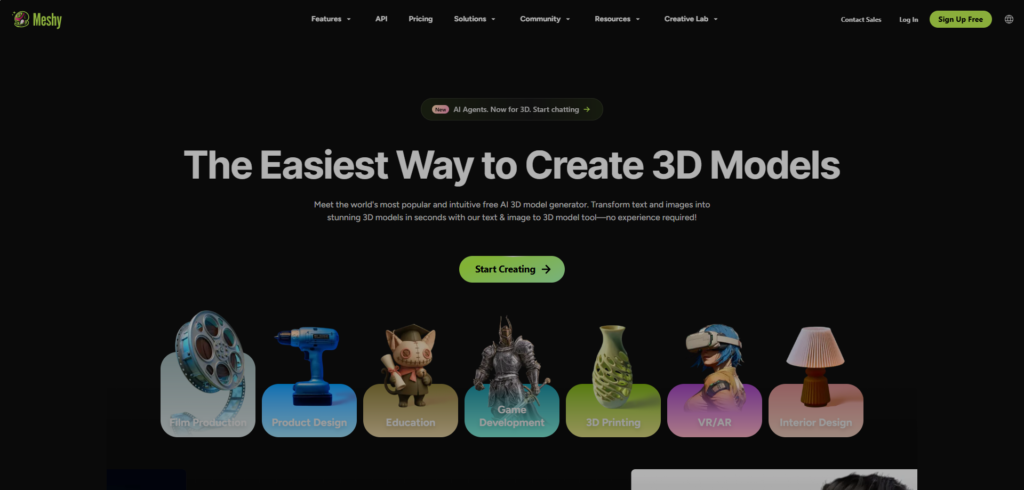
Meshy AI is an AI-powered 3D content creation platform that allows users to generate 3D models from text descriptions and images. The platform focuses on reducing the technical barriers associated with traditional 3D modelling by automating much of the creation process.
The software is designed for:
- Game developers
- 3D artists
- Product designers
- AR/VR creators
- Marketing teams
- Educators
- 3D printing enthusiasts
Rather than requiring advanced modelling skills, Meshy AI enables users to create assets through natural language prompts and image uploads.
Why Meshy AI Has Become Popular
The growing popularity of Meshy AI comes from one simple advantage: speed.
Traditional 3D workflows often involve multiple tools, extensive modeling work, UV mapping, texturing, and optimization. Meshy dramatically reduces the time required to move from idea to usable asset.
For startups, indie developers, and creators working under tight deadlines, this speed can significantly improve productivity.
The platform has also gained traction because it combines several workflows into a single environment rather than forcing users to switch between multiple applications.
Key Features of Meshy AI
1. Text-to-3D Generation
One of Meshy’s flagship features is its Text-to-3D generator.
Users simply describe an object using natural language, and the AI converts that description into a textured 3D model. The platform can generate assets for games, prototypes, visual concepts, and 3D printing projects.
Examples include:
- Fantasy weapons
- Game characters
- Furniture designs
- Product concepts
- Vehicles
- Environmental props
This feature dramatically reduces the time required to create initial concepts.
2. Image-to-3D Conversion
Another standout feature is image-to-3D generation.
Users can upload a single image and transform it into a fully textured 3D model. The system reconstructs geometry and creates textures that can be exported for further use.
This functionality is particularly useful for:
- Product visualization
- Character creation
- Concept design
- Rapid prototyping
- 3D printing
For creators working with existing visual assets, Image-to-3D can save significant amounts of time.
3. AI Texturing
Texturing is often one of the most tedious parts of 3D production.
Meshy includes AI-powered texturing tools that generate materials and textures based on prompts. This helps users create more realistic and visually appealing models without manually painting textures.
4. Multiple Export Formats
Meshy supports numerous export formats, making it compatible with popular 3D software and game engines. Supported formats include:
- FBX
- OBJ
- GLB
- USDZ
- STL
- BLEND
- 3MF
This flexibility makes it easier to integrate generated assets into existing workflows.
5. Browser-Based Workflow
One feature many users appreciate is that Meshy operates entirely in the browser.
There is no software installation, complicated setup, or hardware configuration required. Users can begin generating assets immediately after creating an account.
6. API Access
For businesses and developers, Meshy also provides API access.
This allows teams to integrate 3D generation capabilities directly into their own applications and workflows.
Real-World Use Cases
Game Development
Game developers frequently need large numbers of assets during production.
Meshy AI can help generate environmental props, prototype characters, weapons, and objects, reducing development time during the early stages of a project.
Product Design
Designers can quickly visualise ideas before investing resources into detailed modelling.
This makes Meshy useful for concept exploration and client presentations.
3D Printing
Meshy has become increasingly popular among hobbyists and professionals involved in 3D printing.
Users can generate printable models directly from prompts and export them in formats compatible with common 3D printing workflows.
AR and VR Experiences
Because Meshy supports industry-standard export formats, assets can be integrated into augmented reality and virtual reality projects with minimal effort.
Practical Perspective
After reviewing numerous AI design platforms over the past year, one thing becomes clear: many AI tools create impressive demonstrations but struggle to deliver practical value.
Meshy feels different.
Its biggest strength isn’t simply generating attractive 3D models. It’s the speed at which ideas can be explored.
For creators, the most difficult part of any project is often moving from concept to prototype. Meshy significantly shortens that gap.
The text-to-3D workflow is especially useful for brainstorming. Instead of spending hours creating rough concepts in traditional modelling software, users can quickly test ideas, refine directions, and iterate faster.
The image-to-3D capability is equally impressive for creators who already have concept art or product images available.
That doesn’t mean Meshy completely replaces professional 3D artists.
Complex projects, high-end game assets, and production-level models may still require cleanup, optimization, and additional refinement. However, as a tool for accelerating workflows, Meshy provides substantial value.
The platform is best viewed as a productivity multiplier rather than a replacement for professional expertise.
Meshy AI Pricing
Meshy offers a free plan along with several paid subscription options designed for creators and businesses. Users can start for free and upgrade as their usage requirements grow.
Paid plans provide:
- Additional credits
- Faster processing
- Private asset ownership
- Enhanced commercial usage rights
- Higher generation limits
This pricing structure makes the platform accessible to beginners while still supporting professional users.
Pros and Cons
Pros
- Fast text-to-3D generation
- Powerful image-to-3D conversion
- Browser-based workflow
- Beginner-friendly interface
- Multiple export formats
- AI texturing capabilities
- Suitable for game development
- Useful for 3D printing projects
- API availability for developers
Cons
- Complex models may require refinement
- Generated topology isn’t always production-ready
- Advanced users may still need external tools
- Credit-based generation can add costs for heavy users
Meshy AI Alternatives
If you’re evaluating multiple AI 3D platforms, consider the following:
- Tripo AI
- Alpha3D
- Kaedim
- Luma AI
- Scenario
- 3D AI Studio
Each platform offers different strengths depending on your workflow and requirements.
Who Should Use Meshy AI?
Meshy AI is an excellent choice for:
- Indie game developers
- 3D artists seeking faster workflows
- Product designers
- Startup teams
- Marketing agencies
- AR/VR developers
- 3D printing enthusiasts
- Educators and students
Its combination of accessibility and functionality makes it useful for both beginners and experienced creators.
Final Verdict
Meshy AI has established itself as one of the leading AI-powered 3D generation platforms available today.
Its ability to create textured 3D assets from text prompts and images in minutes represents a significant advancement in digital content creation. Combined with AI texturing, browser-based accessibility, multiple export formats, and API support, the platform offers a compelling solution for creators looking to accelerate their workflows.
While generated assets may occasionally require refinement for professional production environments, the overall value proposition remains strong.
For game developers, designers, marketers, 3D printing enthusiasts, and creative professionals seeking a faster way to create 3D assets, Meshy AI is absolutely worth exploring in 2026.