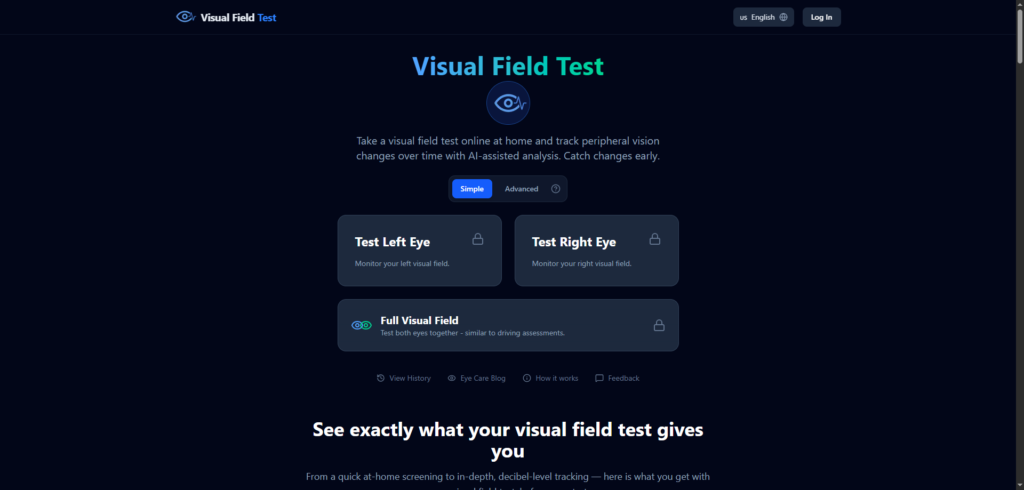
Visual Field Test Review 2026: The Online Tool for Monitoring Peripheral Vision From Home
Most people pay attention to their central vision.
If text becomes blurry, colors seem different, or reading becomes difficult, they usually notice right away. Peripheral vision, however, is different. Changes often happen gradually, and many people do not realize anything has changed until significant vision loss has already occurred.
This is one reason eye care professionals place so much importance on visual field testing.
A visual field test measures how well you can see across your entire field of vision, including the areas outside your direct line of sight. These tests play an important role in monitoring eye health and identifying changes that may be associated with conditions affecting peripheral vision. Visual field testing is commonly used to help detect and monitor vision changes related to glaucoma and other eye or neurological conditions.
Traditionally, visual field testing required specialized equipment and clinic visits. While professional eye examinations remain essential, technology is making vision monitoring more accessible between appointments.
This is where the visual field test comes in.
The Visual Field Test is an online platform that allows users to perform visual field screening and monitoring from home using a computer. The platform combines visual field mapping, result tracking, and AI-powered analysis to help users better understand changes in their peripheral vision over time.
In this visual field test review, we’ll explore how the platform works, its features, benefits, limitations, and who may find it useful in 2026.
Why Monitoring Peripheral Vision Matters
Peripheral vision helps us navigate the world safely.
It allows us to:
- Notice movement around us
- Detect obstacles
- Maintain spatial awareness
- Drive safely
- Walk confidently
- Recognise environmental changes
The challenge is that peripheral vision loss often develops without obvious symptoms.
Many people adapt naturally to small changes. The brain can compensate for missing information, making early vision changes difficult to detect without testing. This is particularly important because conditions such as glaucoma may affect peripheral vision before noticeable symptoms appear.
Regular monitoring can help individuals identify changes that may require professional evaluation.
While online tools are not a replacement for clinical examinations, they can provide additional awareness between appointments.
What Is a Visual Field Test?
Visual Field Test is a web-based vision monitoring platform designed to help users assess and track their visual field from home.
The platform provides an accessible way to perform visual field screening using a standard computer.
According to the platform, users can:
- Test peripheral vision
- Detect potential blind spots
- Track results over time
- Compare previous tests
- Access AI-assisted analysis
- Monitor visual field changes
- Generate reports
- Share information with eye care professionals
Unlike traditional clinical perimetry equipment, the platform is designed for convenience and accessibility while serving as a monitoring and screening tool rather than a diagnostic system.
How Visual Field Testing Works
Before looking at the platform itself, it helps to understand the purpose of visual field testing.
A visual field test measures the area you can see while focusing on a central point.
During testing:
- One eye is assessed at a time
- The user maintains focus on a central target
- Visual stimuli appear in different locations
- The user responds when the stimuli are visible
- The system maps areas of visual sensitivity
This process creates a visual representation of the user’s field of vision. Professional visual field testing has long been used to identify blind spots, peripheral vision loss, and changes associated with various eye conditions.
Visual Field Test brings a version of this concept into an online environment.
How Visual Field Test Works
The platform is designed to make testing straightforward.
Step 1: Start the Test
Users access the platform through a web browser and follow the provided instructions.
The system guides users through the setup process.
Step 2: Choose a Testing Mode
The platform offers different testing approaches, including simple and advanced modes.
Simple mode is intended for quick screening, while advanced testing provides a more detailed assessment of visual field sensitivity.
Step 3: Complete the Assessment
During the test, users focus on a central point and respond when visual stimuli appear.
The system records responses across different areas of the visual field.
Step 4: Review Results
Once the test is complete, users receive results and AI-assisted analysis that highlight patterns and areas that may require attention.
Step 5: Track Changes Over Time
Users can save previous results and compare future assessments to monitor changes.
This historical tracking is one of the platform’s most useful features.
Visual Field Test Review: Key Features
1. Online Visual Field Screening
The platform’s core feature is online visual field testing.
Instead of requiring specialized clinic equipment, users can perform screenings using their own devices.
This makes monitoring more accessible between professional eye examinations.
2. AI-Powered Analysis
The visual field test includes AI-assisted analysis of completed assessments.
The system reviews results and highlights patterns that may help users understand changes in their visual field.
While this does not replace professional interpretation, it can provide useful context for monitoring purposes.
3. Progress Tracking
One of the strongest aspects of the platform is longitudinal monitoring.
Users can:
- Save results
- Compare assessments
- Review historical data
- Track trends
Monitoring changes over time can be particularly valuable for individuals who regularly assess their vision.
4. Simple and Advanced Testing Modes
Different users have different needs.
The platform offers:
Simple Mode
Designed for quick checks and routine screening.
Advanced Mode
Provides more detailed threshold testing and broader visual field mapping.
This flexibility makes the platform suitable for both casual monitoring and more detailed assessments.
5. Accessible Home Testing
One of the main advantages of online testing is convenience.
Users can perform assessments without the following:
- Travelling
- Scheduling appointments
- Accessing specialised equipment
This makes routine monitoring easier.
6. Multi-Language Support
The platform supports multiple languages, making it accessible to users across different regions and backgrounds.
7. Historical Result Comparisons
Comparing current and previous tests can reveal patterns that may not be obvious from a single assessment.
The ability to review historical performance adds significant value to the monitoring process.
8. Shareable Reports
Users can maintain records that may be useful during discussions with eye care professionals.
Having structured information available can help support conversations during appointments.
Benefits of Using Visual Field Test
Convenience
Users can complete assessments from home using a computer and internet connection.
Increased Awareness
Regular testing may help individuals become more aware of changes in their vision.
Ongoing Monitoring
Historical tracking allows users to observe trends over time.
Accessibility
The platform removes many of the logistical barriers associated with routine vision monitoring.
Better Appointment Preparation
Stored results can provide useful information for discussions with eye care professionals.
Encourages Consistent Testing
Convenient access makes it easier to perform regular assessments.
Who Should Use a Visual Field Test?
Individuals Monitoring Eye Health
People interested in tracking visual field changes between appointments may find the platform useful.
Those With Family Histories of Eye Conditions
Regular monitoring can help maintain awareness of potential vision changes.
Adults Over 40
Eye health monitoring often becomes increasingly important with age.
Technology-Friendly Users
Individuals comfortable using online health tools may appreciate the platform’s convenience.
Patients Following Professional Care Plans
Some users may find value in monitoring vision between scheduled clinical visits while continuing professional eye care.
People Interested in Preventive Health
Regular self-monitoring can contribute to broader health awareness habits.
Visual Field Test Pricing
The platform offers access to online testing and monitoring tools.
Features may vary depending on subscription levels and available plans.
These may include:
- Test history storage
- Advanced testing options
- AI analysis
- Progress tracking
- Report generation
Users should consult the official website for the latest pricing and feature details.
Pros and Cons
Pros
- Convenient online access
- AI-assisted result analysis
- Historical result tracking
- Simple and advanced testing modes
- Multi-language support
- Home-based monitoring
- Shareable reports
- Easy-to-use interface
Cons
- Not a replacement for professional eye examinations
- Results depend on proper testing conditions
- Requires user attention and consistency
- Clinical diagnostic equipment remains more comprehensive
Visual Field Test vs Traditional Clinical Testing
Traditional visual field testing remains the gold standard for diagnosis and medical decision-making.
Professional testing typically involves:
- Specialised equipment
- Controlled environments
- Clinical supervision
- Diagnostic interpretation
A visual field test serves a different purpose.
It focuses on:
- Convenience
- Accessibility
- Routine monitoring
- Trend tracking
- Home screening
Rather than replacing clinical care, it functions as a supplementary monitoring tool.
Why Online Vision Monitoring Is Growing
Healthcare technology is moving toward greater accessibility.
People increasingly use digital tools to monitor the following:
- Fitness
- Sleep
- Blood pressure
- Nutrition
- Vision
Online visual field monitoring follows this broader trend.
The goal is not necessarily diagnosis but awareness.
When users can track changes more consistently, they may be more likely to seek professional evaluation when needed.
This makes platforms such as Visual Field Test part of a larger movement toward proactive health monitoring.
Final Thoughts
Vision changes can develop gradually, especially when they affect peripheral sight.
Because many people do not notice these changes immediately, regular monitoring can play an important role in maintaining awareness of visual health.
The Visual Field Test provides a practical way to perform visual field screening and monitoring from home. Its combination of AI-assisted analysis, historical tracking, multiple testing modes, and accessible online delivery makes it an interesting option for individuals who want greater visibility into their eye health between professional appointments.
While it should never replace comprehensive eye examinations or medical advice, the platform offers a convenient way to monitor visual field performance and track potential changes over time.
For users interested in home-based vision monitoring and ongoing visual field awareness, Visual Field Test is worth exploring in 2026.
Frequently Asked Questions (FAQ)
What is a visual field test?
The Visual Field Test is an online platform that allows users to perform visual field screening and monitor peripheral vision from home.
Can a visual field test diagnose glaucoma?
No. The platform is designed as a screening and monitoring tool, not a diagnostic replacement for professional medical evaluation.
How often should I take a visual field test?
The platform suggests regular monitoring, while individual testing frequency should follow recommendations from an eye care professional.
Does the visual field test store previous results?
Yes. Users can save assessments and compare results over time.
Is the visual field test available in multiple languages?
Yes. The platform supports multiple languages and international users.
Is a visual field test worth it?
For individuals who want a convenient way to monitor peripheral vision and track changes between professional eye examinations, Visual Field Test offers useful tools for ongoing visual health awareness.